Your selection
Research, Innovation, Patient care / 07.07.2026
A Leap into the World of Big Pharma
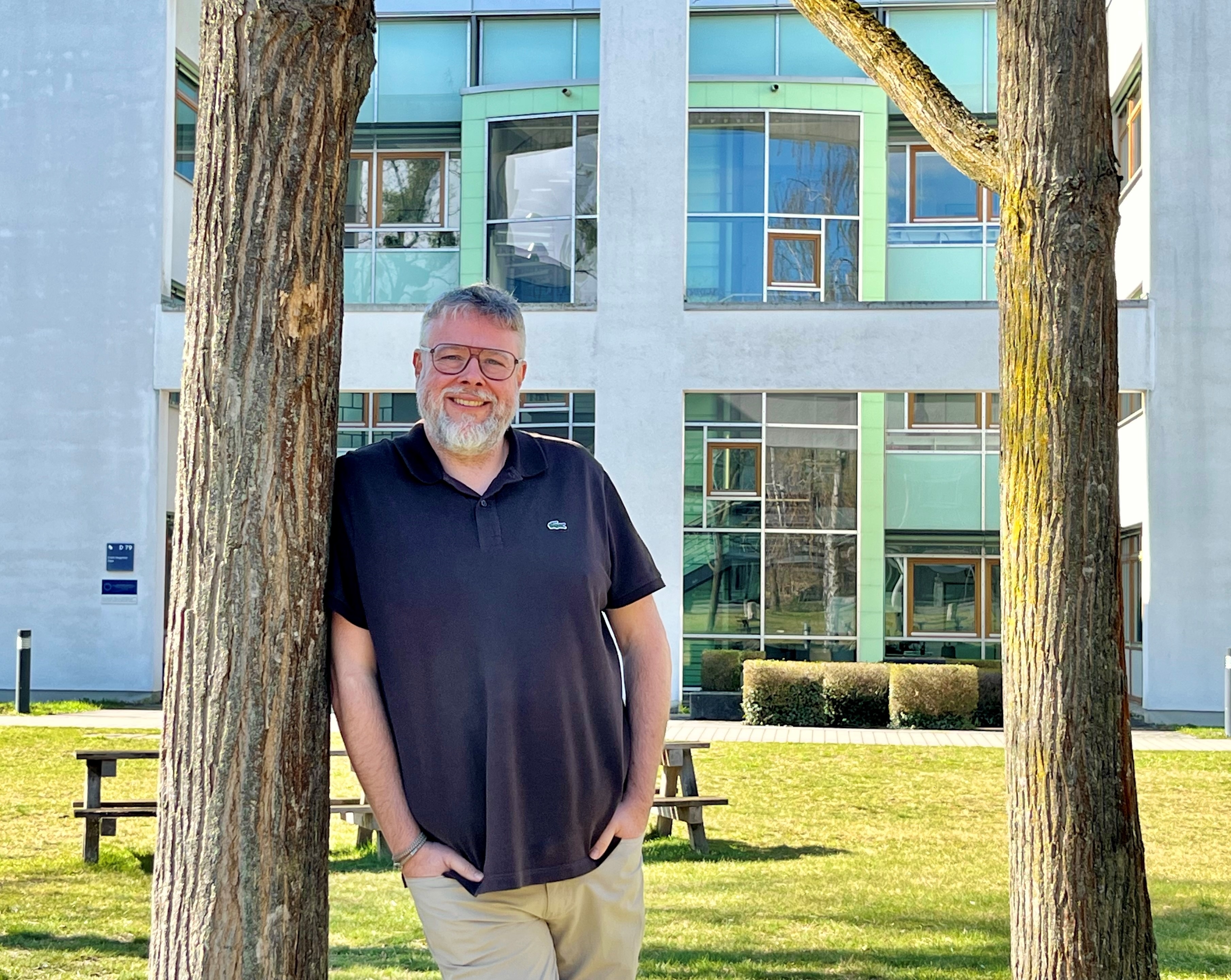
The Successful Transformation of a Startup: An Interview with Dr. Christian Regenbrecht, Vice President of Translational Oncology at GSK and Founder of CELLphenomics
Your startup, CELLphenomics, has been successfully conducting pharmacological research on patient-derived tumor organoids at the Berlin-Buch campus for more than ten years. It has been part of GlaxoSmithKline (GSK) since 2025. What was the background to this?
3D cell culture models, also known as organoids, are becoming increasingly sophisticated and reliable for testing therapeutic compounds. In certain cases and when supported by robust data, regulatory authorities are even willing to forgo animal testing. These models play a key role in making new, better drugs available more quickly. Our startup has advanced organoid research and earned an international reputation. We were the first commercial biobank in Germany to receive ISO certification. We cleared this hurdle with such flying colors that we have since been helping to shape, as part of the ISO commission, how pharmaceutical research with organoids will be conducted in the future.
We had already carried out joint projects with GSK. They were impressed by our research, the high quality of our data, and the volume of data and models we produced. The rule is: The higher the data quality, the higher the predictive value, and the better the foundation for machine learning. They wanted to bring that expertise into their company.
What motivated you to sell?
GSK’s corporate culture was a good fit for us, and ultimately, the deciding factor for me was that together we could have a far greater impact. We share their commitment to putting patients first and providing them with the best possible medications as quickly as possible.
Now we not only have greater resources at our disposal, but we’re also getting much more of a hearing from regulatory agencies like the FDA and EMA. Another very important point: Our entire team remained intact under the new structure. All 18 of us have good, secure jobs.
How did the transition to becoming part of GSK go?
It wasn’t easy at all to preserve the core and identity of CELLphenomics—that is, the reason why people enjoy coming to work here—while still adopting GSK’s corporate culture. It involved many small details, such as strict occupational safety requirements or the shorter work hours typical in England. Overall, there’s a much greater need for coordination in an international pharmaceutical company. They look very closely at whether things are actually needed to address the company’s most pressing issues.
Many things are becoming easier within GSK’s organizational structure: Thanks to legally sound contracts with international partners, for example, we can use tissue from all over the world to grow organoids for our projects.
We’ve expanded, upgraded our labs, and acquired a lot of new laboratory equipment. This allows us to conduct even better research, offer higher throughput, and deliver even better quality. GSK’s strong structure enables continuity—we’re working at full capacity, but no longer partially overburdened as we were in the startup phase.
Has your research changed?
Yes, I would definitely say so. GSK has many collaborations and partnerships. We are now part of a transnational tumor network in which leading scientists in Tokyo, Oxford, and Cambridge discuss joint projects and research questions, evaluate data, and design new experiments. We benefit enormously from this.
How are you settling into your new role?
I have time again to read papers, think about the best possible solution to a scientific question, and develop exciting projects.
Because GSK’s strong support team backs us up in every way, I don’t have to worry as much about things like tax returns, legal issues, or getting the best offers from manufacturers. I was even able to take three weeks of vacation.
ASC Oncology was your second startup, which offered personalized drug testing on tumor organoids.
We no longer help individual patients, but rather a group of individuals. As part of clinical development, we can contribute our expertise in a much more structured way and ensure that active ingredients reach the market faster.
Looking back at your early days?
In 2014, we were a very small startup in a “Shared Lab.” How unlikely was the transformation into something much bigger? Many startups fail during this early growth phase in today’s increasingly complex, globalized world—and no one is to blame for that.
We’ve always been very well supported—even through the straightforward, quick solutions provided by campus management.
Text and Photo: Christine Minkewitz / Campus Berlin-Buch GmbH
Dieses Interview erschien zuerst im Standortjournal buchinside 02/2026.
Overview News
News Buch Berlin
“The coolest part is vortexing”
One week, two topics, and plenty of new experiences: 25 young people take a deep dive into research on rare diseases and immunology at the Life Science Learning Lab “Gläsernes Labor,” including by ana...
more ...Kirstin Bodensiek appointed Administrative Director
As of August 15, 2026, Kirstin Bodensiek has officially taken the helm as Administrative Director of the Max Delbrück Center. She is stepping into the permanent position after leading the center on an...
more ...Eckert & Ziegler Remains on Track in the First Half of 2026
Eckert & Ziegler SE (ISIN DE0005659700, TecDAX) reported sales of €149.3 million in the first half of 2026. The group’s adjusted EBIT dropped by just under 6% to €33.3 million. Adjusted EBIT in the Me...
more ...Events Buch Berlin
25.08.2026, 18:00
Campus-Kino: "In Zeiten des abnehmenden Lichts"
Anders als im Jahresprogramm angekündigt, wird die Verfilmung des gleichnamigen Romans von Eugen Ruge "In Zeiten des abnehmenden Lichts" gezeigt. Regie führte Matti Geschonneck und der Kinostart war a...
more ...25.08.2026, 18:30
Podiumsdiskussion mit Politiker:innen zum Schwerpunkt Wohnungsbauvorhaben in Buch, speziell "Buch am Sandhaus"
Unter anderem geht es um den Schutz der angrenzenden Naturräume, die Moorwiese, den Ausbau des ÖPNV und Anpassungen des B-Plans 3 - 95
more ...01.09.2026, 08:00
Aktualisierungskurs für Projektleiter und Beauftragte für Biologische Sicherheit nach § 28 GenTSV
Ein-Tages-Onlinekurs mit gesetzlich vorgeschriebenen Lehrinhalten, anerkannt und zertifiziert vom Landesamt für Gesundheit und Soziales (LAGeSo)
more ...